4 Steps to Get the Most from Your Liberty® Herbicide
Apr 22, 2026
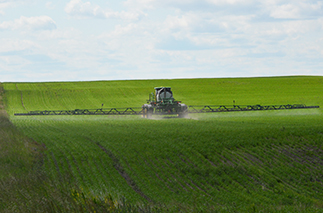
Liberty® 150 SN, Liberty AMP, and Liberty® 200 SN are proven tools for managing tough weeds—but performance depends on how and when they’re used. Following best practices before, during, and after application can significantly improve control and consistency.
Here are four key steps to help you get the most out of your Liberty herbicide application.
1. Start with a Pre-Seed Application
A strong Liberty program begins before the crop is in the ground. Pre-seed applications help set the stage for effective early-season weed control.
Key benefits include:
- Improved control of tough-to-manage weeds such as kochia, volunteer canola, and lamb’s quarters
- Reduced weed pressure heading into crop emergence
2. Decide Before You Spray
Decisions made before application have a direct impact on performance in the field.
Best practices include:
- Choose the right rate:* Use higher rates when weeds are larger, populations are dense, or environmental conditions are challenging.
- Select the right tank-mix partner: Base your tank-mix choice on the weed spectrum present in the field.
Planning ahead helps ensure Liberty is positioned to deliver consistent results.
3. Target the Right Spray Timing
Liberty is a contact herbicide, which makes application timing and environmental conditions especially important.
For optimal performance:
- Target warm, sunny, and humid conditions (minimum 10°C)
- Apply between noon and 6:00 p.m. for best results, although applications can also occur later in the morning once dew has dried, through early evening
- Apply to small, actively growing weeds before branching or tillering—ideally up to 3 inches in height
- Prioritize high humidity and good sunlight, the two most critical environmental factors for maximizing glufosinate ammonium activity
Using Delta T as a spray timing tool
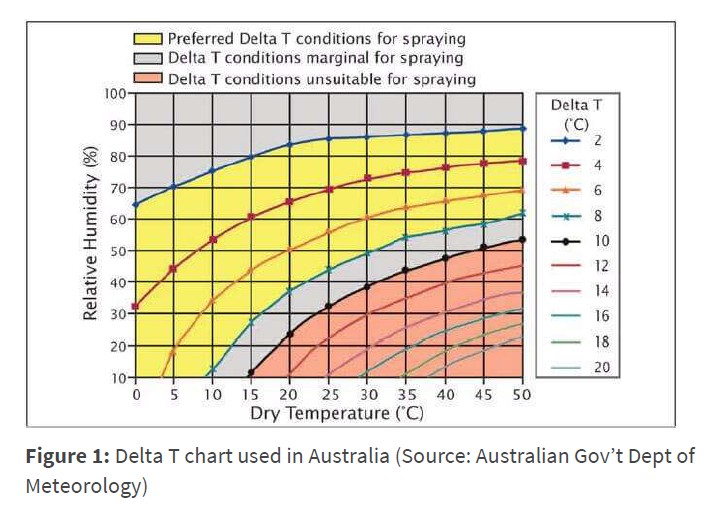
Delta T indicates evaporative risk and is particularly important for contact herbicides like Liberty. When Delta T values approach 8–10, rising temperatures and falling humidity may reduce efficacy. Under these conditions, consider avoiding application or improving spray quality by:
- Increasing water volume
- Using larger droplet size
4. Follow Other Important Best Practices
Attention to spray setup and post-application scouting helps ensure maximum weed control.
Recommended best practices:
- Maintain a minimum of 10 gallons per acre water volume. On challenging days, increasing water volume to 20 gallons per acre may improve control
- Use nozzles that produce medium to coarse droplets
- Maintain spraying speeds of less than 15 MPH. Reduce travel speed under challenging conditions.
- Scout fields 5–10 days after application. Assess control and determine if additional weed management is needed. When making a second pass, travel in the opposite direction to improve coverage of weeds that may have been shaded during the first application
Important Use Notes
- Liberty 150 SN and Liberty AMP are not registered for use in corn or soybean. Applications may result in crop injury.
- Liberty 200 SN is registered for use in corn and soybean. The addition of AMS at a minimum rate of 1 L/ac is recommended.
- *Do not exceed maximum label rates for Liberty® herbicide per season.
For more information on Liberty herbicide, contact your local Shur-Gro Farm Services agronomist today.
Always read and follow label directions.LIBERTY® is a registered trademark of BASF; used under license by BASF Agricultural Solutions Canada Inc.